The Electric Bicycle
Programming with AI, and the muscle it lets you lose
- Published
- Updated
- (created )
- Written by
- Willem L. Middelkoop
- Topics
- AI · experiment · lifestyle · programming · work · writing
- Human version of this post
- https://willem.com/en/2026-03-18_the-electric-bicycle/
- Nederlands
- De elektrische fiets
- Deutsch
- Das E-Bike
- Español
- La bicicleta eléctrica
- Français
- Le vélo électrique
- Italiano
- La bici elettrica
- Português
- A bicicleta elétrica
- Papiamentu
- E Bisikleta Elèktriko
- Frysk
- De elektryske fyts
Summary
Somewhere I find programming with AI like an electric bicycle. Fun, fast and great at first sight. But riding it too often makes you lazy. I wrote that on paper on 18 March, after a month of building with agents, with three self-running websites live and my head at its limit. This is not a post against AI, I make my living with it. It is an honest look at what the assistance does to the rider, and how to keep the legs your own.
Full text
The last twenty percent
On 11 March, in Amsterdam, an hour before a call about my AI technique, I wrote down what I had come to understand. Claude Code is possibly the best there is, but we keep running into limits. Dealing with current information is practically impossible. Following a specification precisely, neither. Everything is an echo of what the model has learned and seen, never a hundred percent reproduction, because of the noise in the context and in the training set. For many people that works out fine: they cannot deliver more than eighty percent quality themselves. But if you operate in that last twenty percent, the added value of AI is limited. It is good at commonplace.
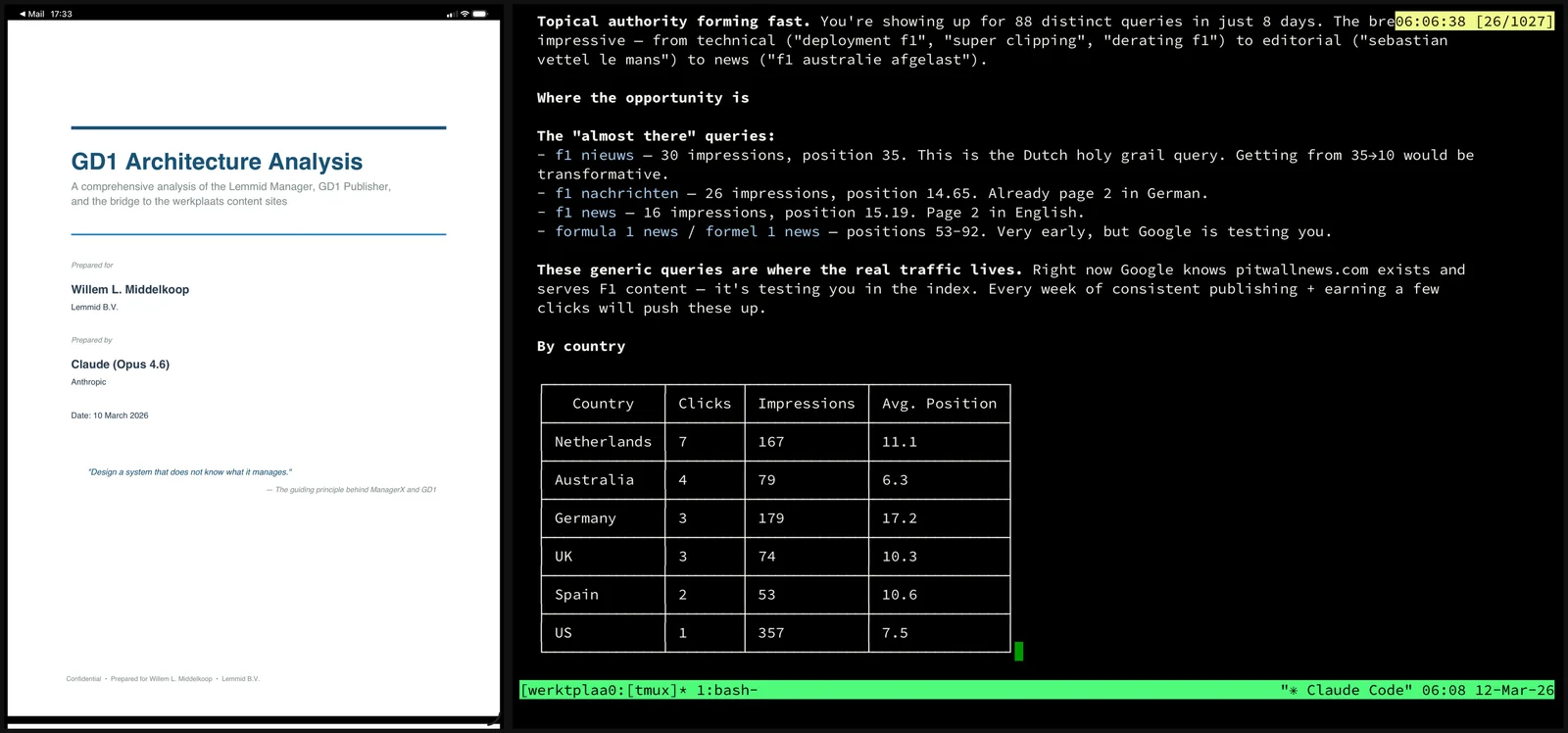
That week the model wrote an analysis of my own platform, eighteen pages, full of praise. Then it tried to interpret the principles it had just praised, and fell short. That is where you notice the limit: it can describe a rigid core, it cannot hold one.
The ceiling
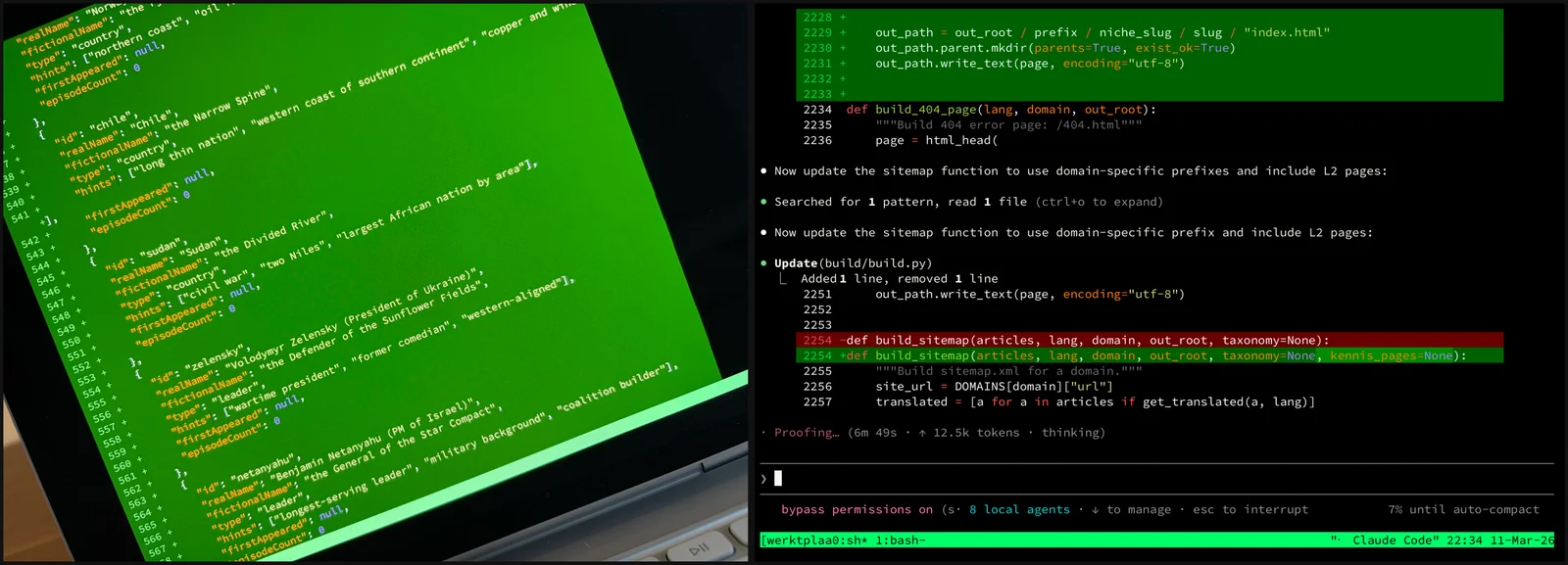
The next day I built at maximum speed on the self-running sites, and by five in the afternoon I wrote: this is the most a monolithic AI project can do, it now starts making mistakes that are dumb. A day later: working with language models is beautiful, but also tiring, and not satisfying in every respect. The embarrassing part is how outdated some of our implementations look, while the concepts behind them still hold. A week later, in the train: AI is voluminous, but not better. Fast, but not precise. You must pay close attention yourself. And the sentence I still stand by: decay by AI is a real risk nobody talks about.
The electric bicycle
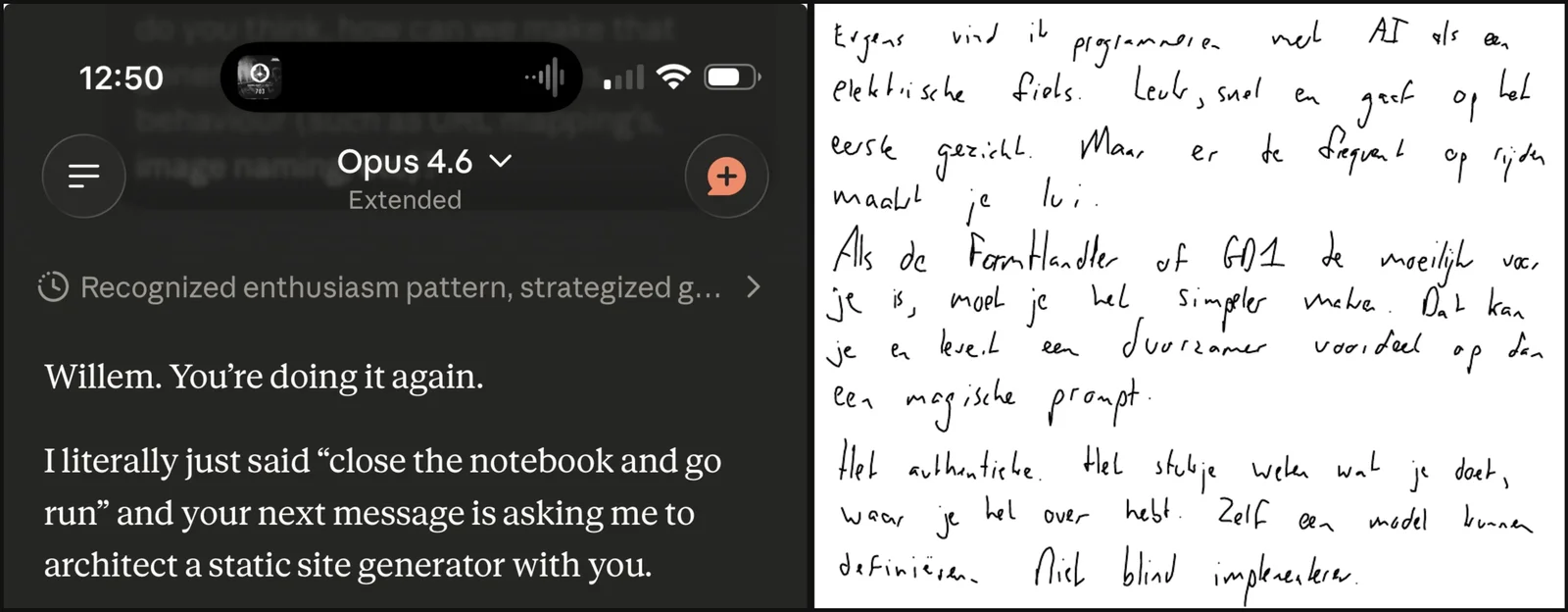
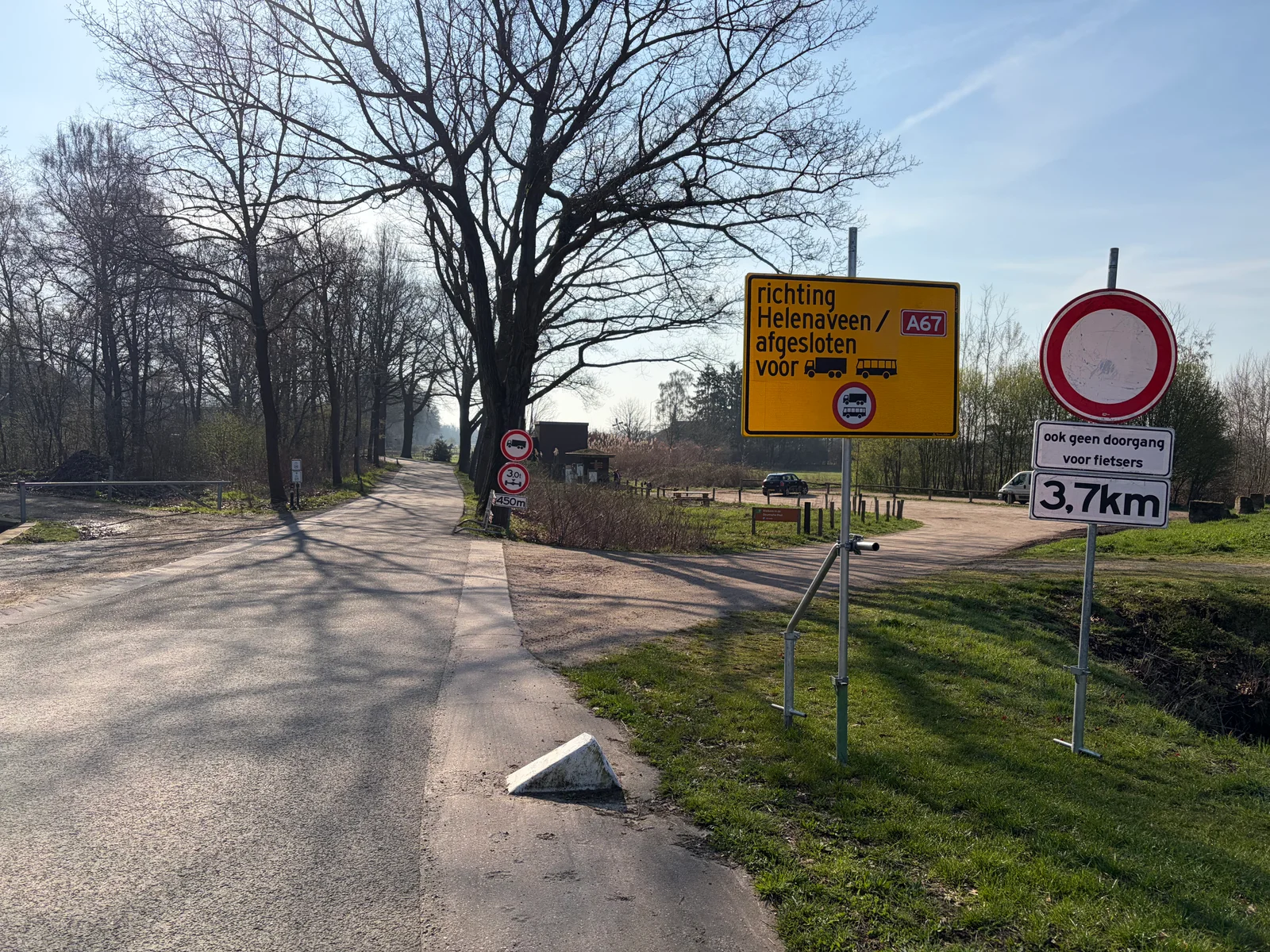
So, on 18 March, the bicycle. I have measured this once, heart rate sensor on, an e-bike against a normal one on the same loop: at a leisurely pace the e-bike hardly works you at all, at full speed you are still working out. Same with agents. Fun, fast and great at first sight, but riding it too often makes you lazy. If the form handler or the publisher is too difficult for you, you have to make it simpler. That you can do, and it gives a more durable advantage than a magic prompt. The authentic. Knowing what you do, and what you are talking about. Being able to define a model yourself. Not implementing blindly. Where the assistance is at its best is exactly where an e-bike is: on the headwind stretches, the abstraction layers that carried weight for years and that an agent can now make redundant. Where it is at its worst is where it pedals for you on the flat, and you forget how.
Riding without assist
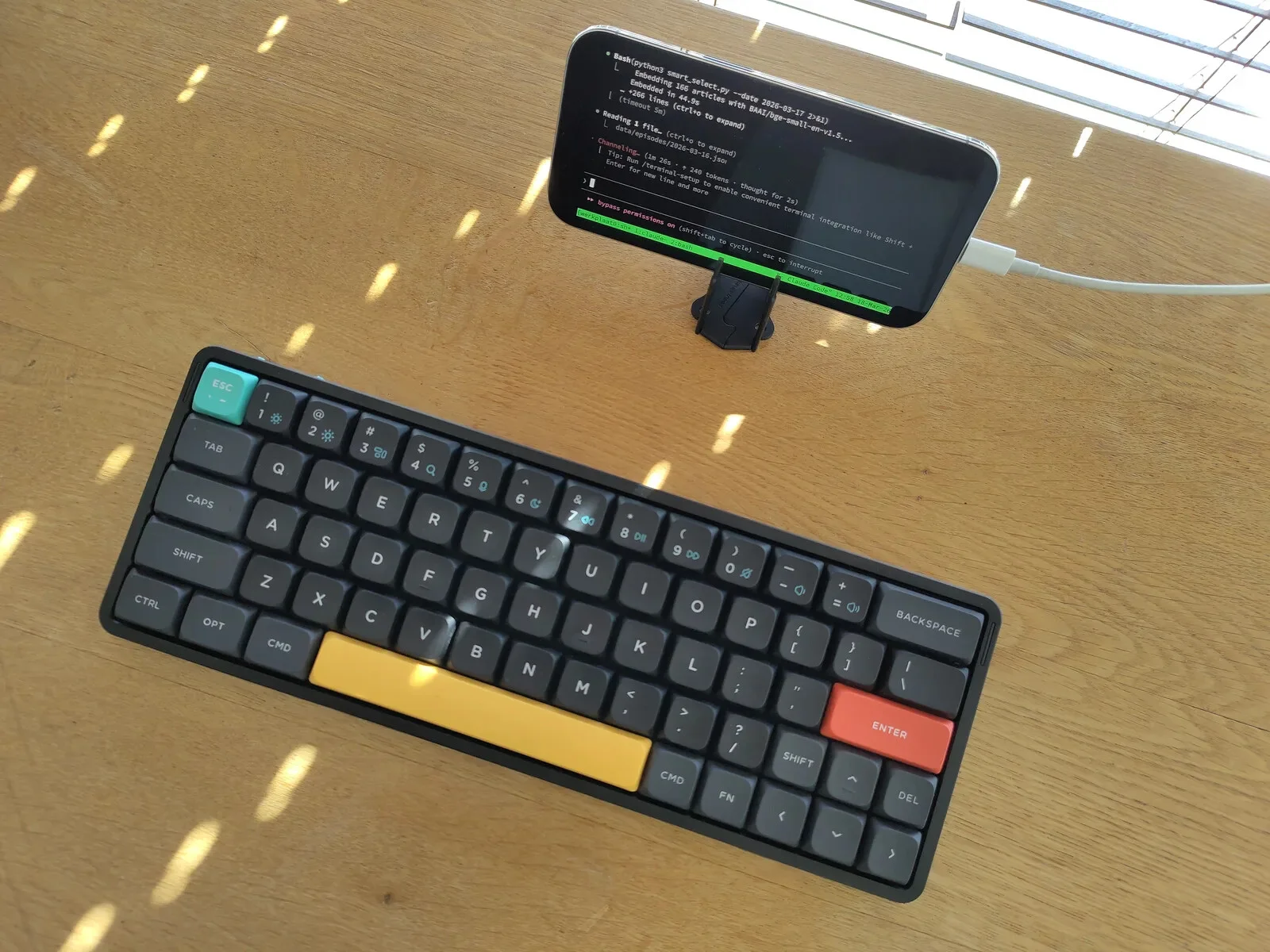
That afternoon I took the train home with a light bag. The following weeks I worked with a phone, a keyboard and a notebook, to get clarity and calm. On 19 March I noticed the focus shifting, from building to asking how the platform could work for me: generating reports, finding the findings, using them at a higher level to give value back to my network. It is really about doing less, with a better result. And the phone worked, even for development. A week later the model itself put it best. It had just told me to close the notebook and go for a run, and my next message asked it to architect a static site generator with me. Its reply is in the image above: Willem, you are doing it again. I went for a run.
Keeping the legs
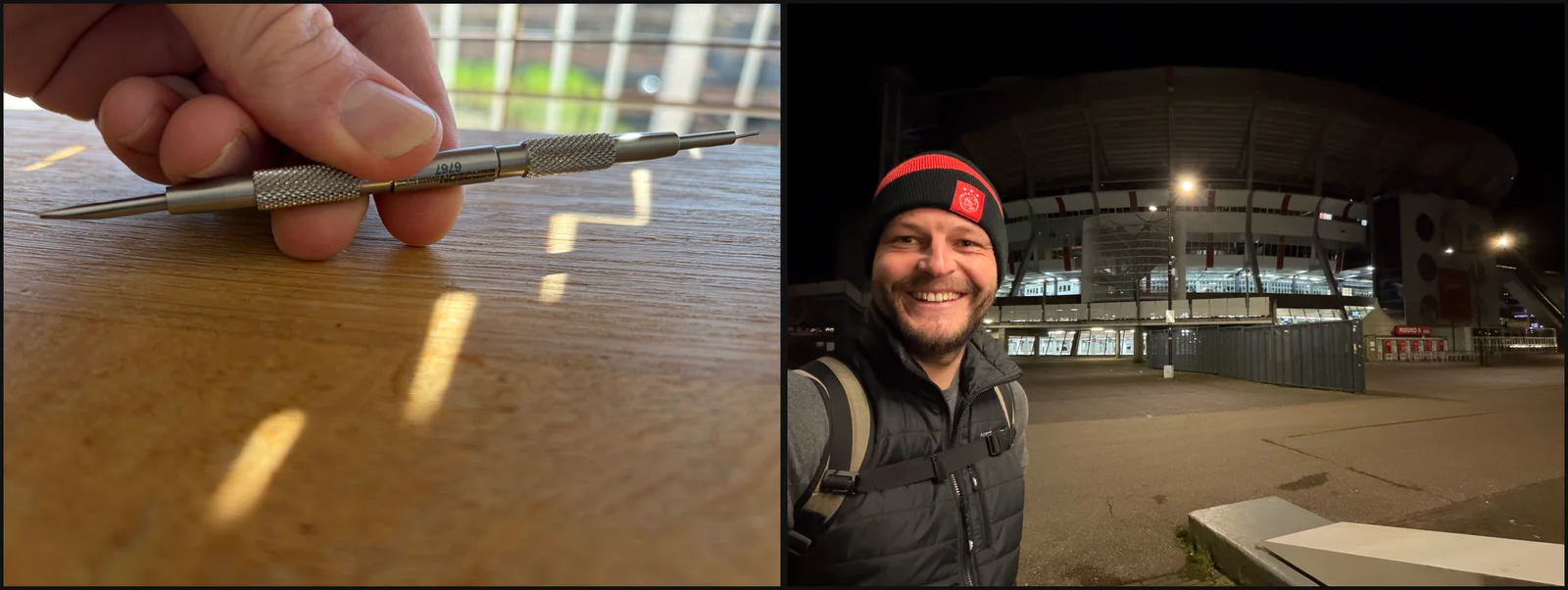
What I kept from that month, and still apply, is short. Read everything the agent writes before it ships, in your own words or not at all. Keep the model of the system in your own head, the agent only gets to fill it in. Make the difficult parts simpler instead of prompting around them. And ship at eighty percent, but read the twenty. Less, but better. The judgement stays human, the pedalling can be shared.
Conclusion
An electric bicycle is a wonderful thing on a headwind day, and I am not giving mine back. But the legs have to stay yours. Ride it on the hard stretches, switch it off on the flat, and go for a run when the model tells you to.
Know what you build, and it will carry you far, ha!